Choosing between refinishing, refacing, or resurfacing cabinets can feel overwhelming during a kitchen remodel. At Let’s Face It, we make it simple. Our team helps you understand what each option offers so you can choose the best fit for your space, goals, and budget. Here’s how these upgrades differ—and how they can transform your kitchen.
Exploring Cabinet Refacing
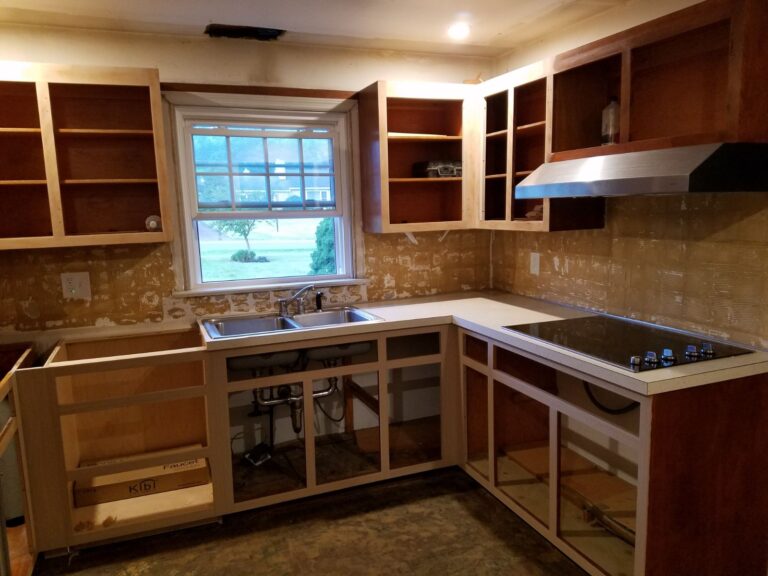
Cabinet refacing upgrades your kitchen by replacing the cabinet doors and drawer fronts with designer quality options, while keeping the existing cabinet boxes intact. We finish the transformation by adding matching panels and veneer to all visible surfaces for a cohesive, like-new appearance.
Refacing cabinets is ideal when:
- Your cabinet structure is solid and doesn’t need replacement.
- You want to dramatically update the style or color.
- You’re working with a mid-range budget.
This method balances cost and transformation. It delivers a big visual impact without the price tag of a full remodel, making it one of our most popular options.
What Is Cabinet Refinishing?
Cabinet refinishing gives your existing cabinets a fresh look by stripping off the old finish and applying new stain, paint, or sealant. It works best when your cabinet boxes and doors are still in good shape but need a visual refresh.
This method is:
- Cost-effective: You reuse what you have and avoid full replacement costs.
- Low-disruption: There’s no need to remove cabinet boxes or replace hardware.
- Efficient: Most refinishing jobs can be completed in a week to 10 days.
If your cabinet layout works and the structure is solid, refinishing offers a simple way to modernize your kitchen’s appearance without major renovation; however, refinishing keeps your existing old doors and designs that are often outdated. Original hinges and decorative hardware are also kept and often not able to be upgraded.
The Process of Resurfacing Cabinets
Resurfacing cabinets involves adding a new surface layer—like laminate or actual hardwood veneer—over your existing cabinet boxes. Unlike refinishing, which simply updates the finish, resurfacing gives your cabinets an entirely new look without replacing the structure.
Resurfacing is a practical option when your cabinet boxes are in good condition, but you want a bolder design change than refinishing allows. With updated textures and finishes, resurfacing can dramatically refresh your kitchen’s style without the cost of a complete remodel. You can even add additional cabinetry, islands, pantry’s, and/or cabinet interior accessories!
Comparing Costs, Longevity, and Visual Impact
Each option offers a different return on your investment. At Let’s Face It, we help you weigh:
- Refinishing: The affordable option with the least visual change. Great for well-kept cabinets you still like, but you will still have original outdated door designs and handles.
- Refacing: A mid-range choice that makes a big impact. You keep your layout but get a brand-new look with long-lasting durability, allowing you to modify or even add new cabinetry. This option delivers the most dramatic update, and though it costs more than refinishing, it gives your cabinets a fresh, high-end finish built to last.
Pros and Cons of Each Method
Not sure which option fits your kitchen best? Here’s how each method compares:
- Refinishing
- Offers the lowest cost and minimal disruption
- Preserves the original cabinet structure
- Limited ability to change the look
- Doesn’t fix damaged or outdated doors
- Refacing
- Provides a significant visual upgrade without full replacement
- Offers durable, customizable style options
- Higher cost than refinishing
- Not suitable for damaged cabinet boxes
Common FAQs and Misconceptions
Is refacing the same as resurfacing?
No—refacing replaces cabinet doors and drawer fronts, while resurfacing adds a new outer material to the cabinet face.
Can I refinish damaged cabinets?
Refinishing only works if the structure and wood are in good shape. It’s labor intensive to remove existing doors and strip all old finish from each door prior to the new stain or finish.
Does refacing require a full remodel?
No. Refacing updates your kitchen’s look without tearing out existing cabinets, allowing you to choose a la carte what you wish. You can keep existing countertops, backsplash, floors, etc., or you can choose to upgrade.
Find the Right Fit for Your Kitchen
Refinishing, refacing, and resurfacing cabinets each offer distinct benefits depending on your kitchen’s condition, budget, and design goals. Let’s Face It helps you find the right solution, whether you want a subtle refresh or a dramatic update.
Contact Let’s Face It to explore your options and bring new life to your kitchen.